






As an American writer living in Germany, I care deeply for both countries. It is a strange time to do so, as powers-that-be in Germany and would-be powers in the States do all they can to reverse traditional roles these two powerhouses have maintained in my half-century lifetime and beyond. There’s a sense of vertigo trying to recall which is the so-called old world and which is the new. Read more
Categories
Art meets Life: An Interview with Ex-Amish Author Saloma Miller Furlong – Part II
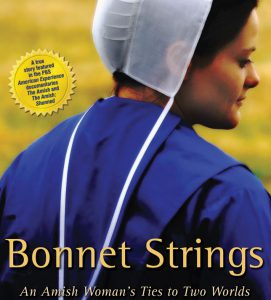 In the second half of the interview, we turn our attention to Saloma Miller Furlong’s Bonnet Strings: An Amish Woman’s Ties to Two World (2014), the succeeding installment to her ex-Amish memoir Why I Left the Amish (2011). Both books depict and reflect on the struggles to put the past behind and embrace an unknown future. In Bonnet Strings, however, before being able to seize the chance to find true happiness and love in the world beyond the Amish, Furlong feels compelled to return to her former community after coming face-to-face with a vanload of relatives and Amish community members in Vermont. Once in her old surroundings, she tries yet again to “wear Amish” and reconcile her rebellious nature with the Amish mindset.
In contrast to the autobiography and its ‘one shot’ at a self-referential non-fictional narrative, serial memoir affords the writer the opportunity to revisit some of the same memories or reflections discussed in an early work from a later perspective or experience. Bonnet Strings opens with just such commentary.
Art meets Life: An Interview with Ex-Amish Author Saloma Miller Furlong
 Saloma Miller Furlong is author of the ex-Amish serial memoirs, Why I Left the Amish (2011) and Bonnet Strings: An Amish Woman’s Ties to Two Worlds (2014). She has also been featured on PBS American Experience documentaries, The Amish and The Amish: Shunned. Furlong’s debut memoir opens with a meditation on death in Amish society as she struggles to come to terms with her own father’s passing. Returning for the funeral stirs up memories of her childhood, troubled teenage years, and abuse. The complex interplay between age, class, gender, tradition, and her father’s mental illness serve as obstacles to her recovery. After years of being pushed to the margins of Amish society, the young woman hits rock bottom. Ultimately, however, she takes charge of her life and makes the impossible decision to put the Amish world behind her. Why I Left the Amish is an uncomfortable story, but – at the same time – one of empowerment. In this first segment of her interview, Furlong discusses the writing process as well as the healing power of both nature and human dialogue. Read more
Dust
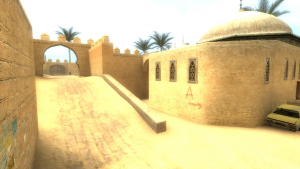
Dust. The first thing he noticed was the hot, dry air and the dust creeping through the tiny slit between his mask and pali scarf. He felt dizzy, and he didn’t know where he was, almost like waking up after a long, deep dream. He stood still trying to calm his breath, but the heat remained unrelenting. It was dark where he was. He found himself under a shelter, a bridge of sorts with bright sunlight on both sides. He felt sweat running from his forehead along his mask down his nose and tasted the salty liquid on his lips. It dripped from his neck all the way down to his boots. A waterfall of sweat. He wanted to move, get out of this heat, out of his clothes, but something made him freeze. He looked down and noticed black boots, pants, a jacket, a protection vest, and gloves as he vanished into the shadows. Only then did he realize that he was not alone. Read more
“In the Hands of Babes”

At family gatherings, my sister likes to tell the story of a time when the men and boys in her family were going out target shooting. The story goes that – as they were leaving one day – her second son, pistol in hand, turned around, exposing each family member, one at a time, to the risk of being shot. “What she doesn’t tell,” my nephew says, “is that I was eight years old at the time.”
My sister’s attitude toward guns is not unusual in the United States. We hear the phrase “responsible gun ownership” a lot, even when referring to children.
Accidental shootings are among the top ten causes of death for children in the United States. Children kill their siblings, themselves, and even their parents. Read more
Grave New World: The Man in the High Castle
It’s no surprise that the advertisement campaign done in late 2015 for a then upcoming Amazon Studios’ series was considered a provocation and had to be ended prematurely due to general outrage. Posters of the Statue of Liberty with its right arm changed to a Hitler salute were hung in New York subway trains above seats changed to spot Nazi-inspired insignia. One may or may not consider that tasteless, but it does the trick by pulling viewers into the uncanny world of The Man in the High Castle. Read more