






On the occasion of the Stop TTIP demonstration with 250,000 protestors in Berlin on October 10, 2015, President Mario Ohoven of the Association of Small and Medium Enterprises (BVMW), Germany, declared: “TTIP and CETA must not fail. That would be a devastating signal for the future of Europe. It is absurd to say that TTIP and CETA will ruin the globalization winner Germany, as claimed by the organizers of the demonstration. For an export nation, such as Germany, free trade is and remains indispensable.”
Categories
Nature’s Craft: The Aesthetics and Design of The Great Camps of the Adirondacks
“An Adirondack camp does not mean a canvas tent or a bark wigwam, but a permanent summer home where the fortunate owners assemble for several weeks each year and live in perfect comfort and even luxury.”
— William Frederick Dix [1903]
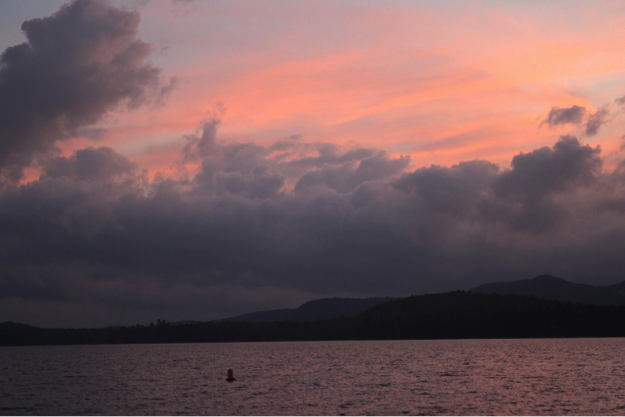
In the late 1800s to the 1920s, a select group of New York’s wealthy elite traveled up to their great camps in the Adirondacks to escape the hot and over-crowded city. Upstate New York’s Adirondack State Park, located 3 hours outside the city of New York, encompasses countless glacial and man-made lakes and spans 6.2 million acres, making it the largest state park in the U.S. In the Adirondacks, these great camps were made up of a series of housing compounds surrounding the lakes. Since these homes were in a remote wilderness, the camp’s architects used numerous native resources to build the homes, consequently giving the camps a unique rustic aesthetic. This great camp’s architecture partially drew upon the Swiss chalet and the Japanese tea-house architecture.
Linking Teacher Training and New Media: The Teaching America Project Revisited
A year and a half has passed since the Teaching America project at Leipzig University’s American Studies Department has entered the practical phase, and a lot has happened since. Let us fill you in on some of the great new developments.
The Teaching America project introduces and strengthens the use of new media both in the university setting and in high school classrooms, thus increasing the amount of U.S.-related topics and resources in English high school instruction in Saxony and beyond. This project minimizes the gap between theoretical university instruction and school reality by providing student teachers with the opportunity to gain teaching experience long before students enter their practical student teaching phase.
The core of the project is an interactive online portal that was created in close consultation with teachers. The portal contains a wide variety of freely available online resources for teachers on American society, politics, culture, history, and literature. And the best part is: It’s open to all interested teachers and teacher trainees.
An Encounter at Canyon de Chelly
It was a clear and sunny day in early April when we arrived with a student group at Canyon de Chelly (pronounced dəˈʃeɪ/ or də·shā′). We had left our hotel on the Hopi reservation, located about one hundred miles to the north, early in the morning. Our destination: White House Ruin down in one of the creeks at Canyon de Chelly in northeastern Arizona.
As Sabrina and I walked down the steep trail, we encountered two people, a man and a woman. They were dressed in the official National Park Ranger outfit and wore the firm felt hat so characteristic of outdoor officials in the United States. White House Ruin, located within the boundaries of the Navajo Nation, was built by the Anaszasi (or Ancient Ones), towards the end of the 11th century. Why the Anaszasi left around 1300 A.D. is still debated among archaeologists; latest findings indicate that climatic reasons – the increase in temperature and the corresponding decrease in rainfall – might have been the reason.
“Shall we ask them for an interview”? Sabrina, cell phone in hand, looked ahead at the two people slowly approaching. Then she looked at me. I was doubtful: “Will they grant us an interview right here, on the spot?”
Well, they did.
Please activate javascript to watch the video
https://youtu.be/RY4IQ_vntks
https://youtu.be/RY4IQ_vntks
If it’s Tuesday, it Must be Cold War Again
“May you live in interesting times.”
Many Americans coming to Europe are lured by the romance: fountains in Rome, cafés in Paris, Spanish guitars, the cool vibes of Berlin. All those existed in the nineteen twenties and early thirties too, though now as then there is something else in the air. It is not featured in any of the very attractive four-color brochures put out by tourist agencies. Indeed, one won’t see, hear, feel, or taste it if one only has a few hours off the cruise ship, or if the itinerary has one shuttling between airport and hotel as fast as one can shout “Next!” But slow down enough to look between the monuments and landmarks and it’s here: Fear. Like a dash of Tabasco in the soup, it is giving life here in Europe an unexpected edge these days. A little bite to the brew.
The Son-in-Law

A flutter of anxiety shook Mina as she heard her husband Majid and their son-in-law Donald in the backyard, talking in not quite agreeable tones. “Stop, stop, she can fall and hurt herself,” Majid, who rarely raised his voice, shouted. Mina went to the window and looked into the backyard where Donald was throwing Leila, her three-year-old granddaughter, into the air and catching her. Leila was squealing with laughter, her face all red. Donald continued to play, throwing her into the air, catching her. Donald was a hefty, broad-shouldered man with long, blond hair and a strong, square face. Just the way he looked unsettled Mina. Was this going to develop into something more volatile? But to her relief, Donald stopped and, holding the baby in his arms, moved back inside the house.