






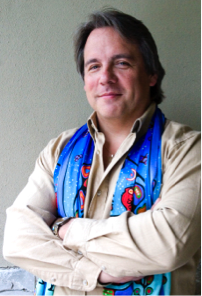
 Drew Hayden Taylor is an award-winning Canadian Ojibway author of plays, short stories, novels, and critical essays. He has lectured worldwide on a variety of Native issues and earned the reputation of a true cultural mediator versed in confronting cultural misunderstandings, stereotypes, and prejudices – preferably with humor. Recently, I conducted a Skype interview with him that I’d like to refer to it as the “chat(ter) box interview” since it all began with some informal chatting and turned into a bona fide interview. Curious? Then read on.
Read more
Categories
12 Years a Slave
When Salomon Northup (Chiwetel Ejiofor) accepts a two-week job offer as a musician from two white men with whom he travels from Upstate New York to Washington, D.C., he does not expect that the last evening spent in friendly company will mark the turning point of his life. Beaten, robbed, and scared, he awakens in a small cell the next morning—his identity no longer of interest or importance. All of the sudden, he is a simple black man, a ‘nigger’ who is given the new name Platt, a slave who apparently ran away from his owner in Georgia. He spends twelve years at different plantations in Louisiana, far away from his family and old life, doing hard physical labor alongside other slaves while still holding on to his hope and belief of returning home one day.
Marijuana in America: Election Night at the Pot Shop
Earlier this week, a state appeals court in Michigan ruled that a prosecutor’s “personal diatribe” in court against that state’s medical marijuana law spoiled a conviction in a pot-growing case where the evidence had otherwise appeared solid. In New York City, the mayor and police commissioner recently announced they’ll stop arresting people for pot possession and instead merely issue tickets. In Maine, pro-marijuana advocates believe their state could become the first in the Northeast where weed is legal.
When I read news like that, as a recent Colorado transplant, it’s hard not to let out a smug and self-satisfied yawn. I hear the voice of the first person I met behind the counter at a legal marijuana shop just outside Colorado Springs as he scanned my ID with a conspiratorial grin: “Welcome to the future.”
Lonely
 I wrote the short story “Lonely” in one of my university seminars. It was meant to be an assignment. Just an assignment. But my professor convinced me to enter the Daniil Pashkoff Prize for Creative Writing and submit my story. So I did. Even though my text didn’t win, I’m always grateful for new experiences, and for people believing in me.
“Lonely” is a story about a woman’s despair and obsession. She struggles with interpersonal relationships and tries to keep everything around her in perfect order. When her boyfriend doesn’t appear for dinner on Valentine’s Day, she starts to question his feelings…
Lonely
Tick. Tick. Tick. The clock’s steady rhythm fills the air. It is dark. Only now and then, when a car drives by, a flash of light hits the room. Someone is sitting at the kitchen table, frozen. Everything seems to be prepared for a dinner, but the meal on both plates is cold and the candles already burnt down. In the middle of the table a lone vase is awaiting a bouquet of roses. Waiting. Still waiting.
Of Conceptual Haunts and Tacit Assumptions:
A Current Take on Multiculturalism
On January 9, 2014, Berndt Ostendorf, Professor Emeritus of North American Cultural History at the Amerika-Institut, Ludwig-Maximilians-Universität München, gave a talk on “The Rise and Fall of Multicultural Theory and Practice: The Ideological Contradictions of Belonging” in the Leuphana lecture series, “Maple Leaf & Stars and Stripes.”
Ostendorf is a widely published researcher on areas as diverse as the cultural history of immigration, the politics of difference, multiculturalism, creolization and circumatlantic diasporas, American popular culture, the culture industry, New Orleans, and American music. He is also a board member of the Rat für Migration, a German migration policy think tank. Read more
Canyon de Chelly, Navajo Nation, Arizona
I first came across White House Ruin in Canyon de Chelly (pronounced dəˈʃeɪ or də·shā′) in N. Scott Momaday’s Pulitzer Prize winning novel, House Made of Dawn (1968). White House Ruin, he wrote, is the home of Talking God, one of the most prominent Navajo deities. For years I thought that White House Ruin – much like Talking God – belongs to the realm of Native American creation myths: significant for understanding the workings of the oral tradition, but long devoid of any significance and thus inconsequential for everyday life. Yet all of this changed when I first visited Canyon de Chelly in January 1994. Not only was White House Ruin one of the main attractions of the stunning, intertwined network of canyons at Canyon de Chelly, but the sun in the sky and the snow on the ground created an atmosphere that felt almost mystical.